
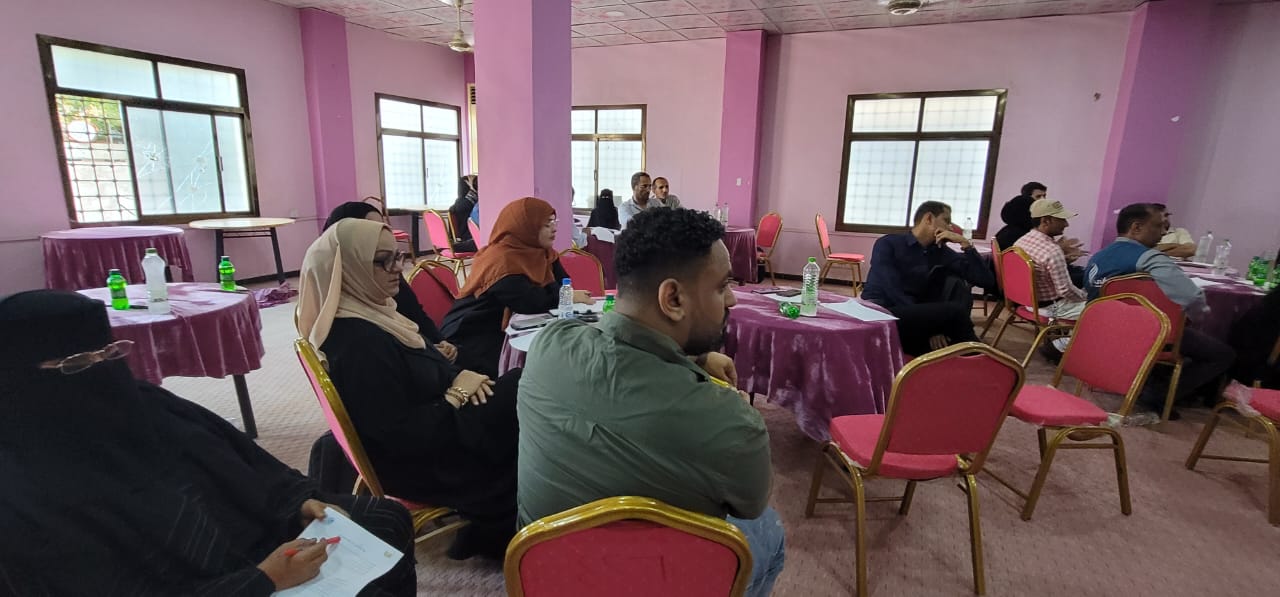
In a significant step toward strengthening institutional partnership with civil society organizations (CSOs), the Ministry of Social Affairs and Labor convened its first periodic meeting with local CSOs on 1 February 2026 at the Ministry’s main hall. The meeting was held under the patronage of H.E. Dr. Saeed Al-Zaouri, Minister of Social Affairs and Labor, and was financially supported by Taaziz Foundation for Development and Bidaya Youth Organization, with the participation of approximately 40 local institutions and organizations.
In a significant step toward strengthening institutional partnership with civil society organizations (CSOs), the Ministry of Social Affairs and Labor convened its first periodic meeting with local CSOs on 1 February 2026 at the Ministry’s main hall. The meeting was held under the patronage of H.E. Dr. Saeed Al-Zaouri, Minister of Social Affairs and Labor, and was financially supported by Taaziz Foundation for Development and Bidaya Youth Organization, with the participation of approximately 40 local institutions and organizations.
The meeting was officially opened by Deputy Minister Dr. Saleh Mahmoud, who emphasized the importance of institutionalized dialogue and structured collaboration between the Ministry and CSOs. In his opening remarks, he highlighted that civil society represents a strategic partner in advancing sustainable development, promoting transparency and accountability, and expanding outreach to vulnerable communities.
Senior Ministry representatives attended the session, including Ms. Faiza, Deputy of the Women and Child Sector; Ms. Monia Mahmoud from the Technical Office; and Mr. Ihab. Discussions focused on strengthening coordination mechanisms and establishing a regular platform for engagement.
The session was facilitated by Mr. Ahmed Ali Nasser, who led an interactive SWOT analysis based on the foundational meeting report to assess the current status of civil society organizations. The analysis identified key findings:
Strengths
Dedicated and qualified young professionals engaged in development work.
Broad geographic outreach and strong community presence.
Accumulated experience in implementing donor-funded projects.
Strong volunteerism and initiative-driven culture.
Weaknesses
Limited financial sustainability and institutional resources.
Gaps in governance systems and internal procedures in some organizations.
Need for enhanced proposal development and grant management skills.
Varying levels of compliance with donor requirements.
Opportunities
Increased governmental interest in structured CSO engagement.
Availability of international and regional donor support.
Potential for building alliances and coordination networks.
Growing momentum toward digital transformation and institutional development.
Threats/Challenges
Complex economic conditions affecting funding sustainability.
Limited regular institutional coordination.
Duplication of interventions and absence of shared databases.
Administrative and regulatory constraints facing some organizations.
Participants agreed on a set of strategic recommendations categorized by timeframe:
Short-term:Establish a periodic coordination platform, develop a unified CSO database, and deliver urgent capacity-building programs on governance and compliance.
Medium-term:Develop an institutional partnership guideline, launch specialized training in grant management and strategic planning, and strengthen monitoring and evaluation systems.
Long-term:Institutionalize a national framework for Ministry-CSO partnership, advocate for enabling legislation, and promote diversified funding mechanisms to ensure sustainability.
Taaziz Foundation for Development and Bidaya Youth Organization reaffirmed their commitment to supporting coordination efforts, institutional capacity development, and financial sustainability initiatives, contributing to higher-quality interventions and measurable development impact.
This inaugural meeting marks a foundational step toward building a strategic, trust-based partnership that positions civil society as a key driver of sustainable development and community resilience.
Is this conversation helpful so far?